
Nylon vs. Polyester: What's the Difference and Which Is Better?
Table of Contents
Nylon is generally the better choice when abrasion resistance, flexibility, and a smoother feel matter most. Polyester is often better when low moisture absorption, quick drying, color retention, and value are the priorities.
The better material still depends on the product. A tightly woven polyester fabric with a protective coating can outperform a loosely woven nylon fabric, while a heavy nylon fabric may be unnecessary for a light everyday bag.
The most common mistake is judging a product by the fiber name alone. Fabric weight, weave, denier, coating, stitching, and hardware can matter as much as whether the label says nylon or polyester.
This guide compares the two materials in practical terms and shows which one is likely to work better for bags, clothing, travel gear, and outdoor use.
Nylon and Polyester at a Glance
Nylon and polyester are both synthetic fibers, but they come from different polymer families. Nylon is a polyamide, while the polyester used in most textiles is polyethylene terephthalate, commonly called PET. That chemical difference affects how each fiber responds to friction, moisture, sunlight, heat, and dye.
|
Feature |
Nylon |
Polyester |
Practical takeaway |
|---|---|---|---|
|
Abrasion resistance |
Usually excellent |
Usually good |
Nylon often suits high-friction areas |
|
Moisture absorption |
Absorbs more moisture |
Absorbs very little moisture |
Polyester usually dries faster |
|
Feel |
Often smoother and more flexible |
Often slightly crisper |
Construction can change the feel |
|
Sun exposure |
Can lose strength with extended UV exposure |
Often selected for better outdoor color and UV performance |
Coatings and dyes still matter |
|
Color |
Can accept rich dyes |
Often holds color well |
Either can fade under harsh conditions |
|
Cost |
Often more expensive |
Often more affordable |
Price varies by grade and construction |
|
Common bag uses |
Technical packs, linings, high-wear panels |
Backpacks, luggage, uniforms, and everyday bags |
Both can perform well |
These are general tendencies rather than guarantees. A product's complete fabric specification gives a more useful answer than the fiber name by itself.
How Nylon and Polyester Perform Differently
Both fibers can be made into light, strong fabrics. The practical differences become clearer when the material is exposed to rubbing, moisture, sunlight, or repeated use.
Strength and Abrasion Resistance
Nylon is known for toughness and resistance to repeated rubbing. It can bend and flex without feeling brittle, which is useful for backpack bases, straps, and areas that contact clothing or the ground. At a similar fabric weight and construction, nylon often has an advantage when abrasion is the main concern.
Polyester also offers good everyday durability. It is widely used in backpacks, luggage, work bags, and outdoor products because it can balance strength, weight, and cost. The difference may be difficult to notice in normal use when both fabrics are well woven and properly reinforced.
Do not compare fiber names without comparing construction. A dense polyester fabric can be more durable than a thin nylon fabric. Seams, binding, zipper quality, and reinforcement at the handles may fail before the main fabric does.
Moisture Absorption and Drying
Polyester absorbs less moisture into the fiber than nylon. Water may remain on the surface or between yarns, but the fiber itself takes in very little. This usually helps polyester dry faster and change less when conditions are humid.
Nylon absorbs more moisture, although it still dries much faster than many natural fibers. When wet, nylon can feel slightly heavier and may take longer to return to its dry state. This difference matters more for clothing and outdoor equipment than for a small lined pouch.
Neither material is automatically waterproof. Water resistance depends on the weave, coating, laminate, seams, and zippers. A water-repellent finish may help droplets bead on the surface, but it does not guarantee protection during heavy rain or immersion.
Sunlight and Color Retention
Polyester is often chosen for products that face regular sunlight because it generally holds color well and has useful resistance to outdoor exposure. Nylon can weaken or fade after extended ultraviolet exposure, especially when it lacks protective additives or coatings.
That does not make every polyester product suitable for permanent outdoor use. Both materials can degrade in sunlight. Dark colors, treatments, yarn type, and how the item is stored all affect the result. Keep bags out of prolonged direct sunlight when possible, regardless of the fiber.
Feel, Flexibility, and Appearance
Nylon often feels smoother, softer, and more flexible. Washed nylon can have a relaxed matte surface, while high-tenacity nylon may feel technical and tightly woven. These variations make nylon useful in fashion bags as well as performance equipment.
Polyester can feel crisp or structured, although modern polyester fabrics range from soft brushed textiles to firm luggage shells. It also tends to resist wrinkling and can hold a consistent shape well. The finish and weave usually have more influence on appearance than the fiber name alone.

Which Material Is Better for Different Uses?
There is no universal winner. Choose the material that matches the most demanding part of the job rather than selecting one based on reputation.
Backpacks and Everyday Bags
Nylon is a strong choice for a bag that experiences frequent rubbing, bending, or close contact with the body. Polyester is often a practical choice for school, commuting, and general travel because it can provide dependable performance at a reasonable cost.
When comparing laptop backpacks, look beyond the exterior fiber. Check the device compartment, base padding, strap attachment, zipper paths, and water-resistant construction. Purevave's guide to durable and lightweight laptop backpack materials covers these supporting details.
For a light daily load, either material can work. For a bag that will scrape against rough surfaces or carry dense equipment, a suitable high-denier nylon may provide an advantage. For regular commuting in mixed weather, a coated polyester bag with solid seams may be the more economical choice.
Clothing and Activewear
Polyester is common in shirts, fleece, and activewear because it absorbs little moisture and dries quickly. Fiber shape and fabric construction can move sweat across the surface, although comfort also depends on knit structure, ventilation, and finish.
Nylon is common in hosiery, swimwear, leggings, and stretch garments because it can feel smooth and resist abrasion. It may be preferred where the fabric repeatedly rubs against equipment or skin. Blends often add elastane for stretch, so the care label may list more than one fiber.
Travel and Outdoor Gear
Nylon often appears in technical backpacks, tents, stuff sacks, and lightweight outdoor gear where strength and abrasion resistance are valuable. Polyester can be a better fit for gear that spends more time in sunlight or needs to dry quickly after light rain.
The intended environment should decide the priority. A hiking pack may need a reinforced nylon base, while a car camping organizer may work perfectly well in polyester. For wet conditions, inspect the coating and seam construction instead of relying on the shell fiber alone.
Linings and Interior Compartments
Polyester is widely used for linings because it is light, stable, and easy to wipe. Nylon linings can feel smoother and may offer useful abrasion resistance around tools or electronics. A manufacturer can also combine the fibers to use each where it performs best.
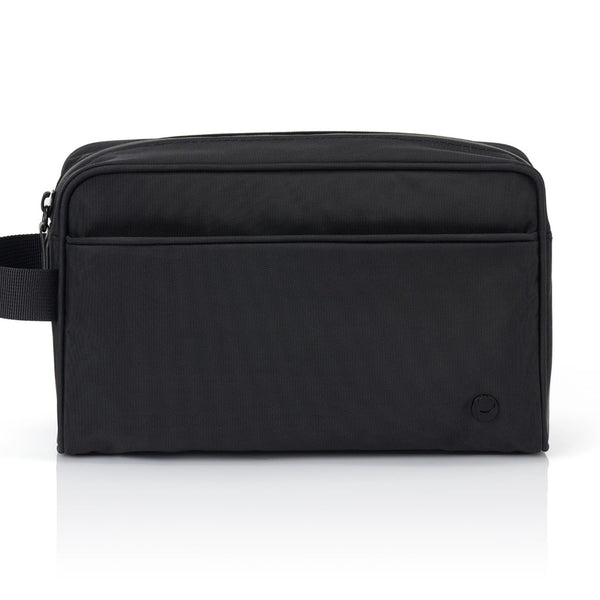
The Purevave Dopp Kit is one verified example. Its product page lists a 420D water-repellent nylon body and a polyester lining. The combination shows why the choice does not always need to be nylon or polyester for the entire product.
Look Beyond the Fiber Name Before Buying
Two products labeled with the same material can perform very differently. Check the following construction details before deciding which is better.
Denier and Fabric Weight
Denier describes the linear density of the yarn. A higher number generally indicates a heavier yarn, but it does not directly measure finished fabric strength. A 420D nylon and a 600D polyester are not automatically comparable because yarn type, weave, coating, and test method can differ.
Use denier as one clue. Also consider the total product weight and where heavier fabric is placed. A bag may use a lighter body with a reinforced base to reduce weight without sacrificing durability in the highest-wear area.
Weave, Coating, and Finish
Ripstop weaves add a reinforcement pattern that can help limit the spread of a small tear. Tightly woven plain or basket weaves may provide a smooth, stable surface. Coatings such as polyurethane can improve water resistance but may change the fabric's feel, breathability, and long-term care needs.
Do not assume a fabric is waterproof because it looks coated. Check the manufacturer's exact wording and whether seams and zippers are protected. Water resistant and water repellent describe limited protection, not complete sealing.
Stitching, Zippers, and Reinforcement
A durable shell cannot compensate for weak construction. Inspect stitching around handles and shoulder straps, since these areas carry the load. Look for reinforcement at corners, a stable zipper track, and a base that suits what the bag will hold.
For nylon bags, cleaning instructions can vary with coatings, lining, and trim. This guide to removing stains from nylon bags explains why mild cleaning and a hidden-area test are safer than aggressive scrubbing.
Final Thoughts
Nylon is usually the stronger choice for abrasion resistance, flexibility, and a smooth feel. Polyester is often the better choice for quick drying, low moisture absorption, color retention, and value. Those advantages are useful starting points, not final verdicts.
For bags and travel gear, fabric construction matters as much as fiber chemistry. Compare denier, weave, coating, seams, lining, zippers, and reinforcement. The better product is the one designed for its actual load and environment, even when its material is not the winner in every category.
Frequently Asked Questions
Can Nylon and Polyester Be Recycled?
Both can be recycled, and products may use recycled nylon or recycled PET. Availability and processing vary, and recycled content does not by itself prove that a product has a lower total environmental impact. Check for a clear material claim and credible certification when that factor affects your purchase.
Does Nylon or Polyester Pill More Easily?
Pilling depends heavily on yarn type, fiber length, fabric structure, and friction. Both materials can pill. Strong synthetic fibers may hold pills on the surface instead of allowing them to break away, so fiber content alone cannot predict the result.
Can You Iron Nylon or Polyester?
Both materials can be damaged by excessive heat. Follow the care label and use a low setting only when ironing is permitted. A pressing cloth and minimal contact reduce risk. Avoid testing high heat on coated bags, foam-backed panels, or bonded fabrics.
Is Nylon or Polyester Better for Sensitive Skin?
Fiber content alone does not determine skin comfort. Texture, dyes, finishes, detergent residue, heat, and trapped moisture may all contribute to irritation. Choose a smooth fabric, wash it as directed before extended wear, and stop using it if irritation develops.