
Standard Backpack Sizes: A Guide to Dimensions and Capacity
Table of Contents
Most everyday backpacks hold between 15 and 30 liters, while travel and outdoor backpacks often range from 30 to 50 liters or more. There is no single standard size, so both the outside dimensions and the stated capacity matter when you compare bags.
The right size depends on what you carry, how long you will be away, and where the backpack needs to fit. A slim 20 liter work bag and a rounded 20 liter daypack may hold the same stated volume but handle laptops, clothing, and bulky items differently.
A common mistake is choosing by liters alone. Capacity tells you the approximate internal volume, but it does not confirm that a laptop will fit or that a bag will meet an airline's size limit.
This guide explains common backpack size ranges, how dimensions and liters relate, and which capacity usually works for school, work, daily use, travel, and hiking.
Backpack Size Chart by Capacity
Backpacks are commonly grouped by capacity rather than one fixed set of measurements. The dimensions below are approximate because the shape, padding, pockets, and construction vary by brand and design.
|
Backpack category |
Common capacity |
Typical uses |
|
Mini backpack |
6 to 10 liters |
Phone, wallet, small bottle, and personal items |
|
Small backpack |
10 to 20 liters |
Daily essentials, light commute, sightseeing, or short outings |
|
Medium backpack |
20 to 30 liters |
School, work, gym, day hikes, or personal item travel when permitted |
|
Large backpack |
30 to 45 liters |
Weekend travel, carry-on packing, or gear-heavy day trips |
|
Extra-large backpack |
More than 45 liters |
Multi-day hiking, extended travel, or specialized equipment |
These ranges help narrow the options, but they are not universal standards. A backpack with thick foam, a curved top, or several external pockets may provide less usable interior space than a simple rectangular bag with the same outside measurements.
You can compare current Purevave laptop backpacks once you know the general capacity and features that suit your routine. Check each product's listed measurements instead of relying only on category names such as small, medium, or carry-on.

How Backpack Dimensions and Capacity Work
Dimensions describe the physical space a backpack occupies. Capacity estimates the total volume it can hold. The two measurements are related, but they are not interchangeable.
External and Internal Dimensions
External dimensions measure the complete outside of the backpack. They matter when the bag must fit inside a locker, under an airline seat, in an overhead bin, or within another limited space. Fixed front pockets, rigid handles, frames, and wheels can increase these measurements.
Internal dimensions describe the usable space inside a compartment. They matter when you need to fit a laptop, binder, camera cube, packing organizer, or lunch container. Padding, seams, curved corners, and dividers make the internal measurements smaller than the exterior.
Two backpacks with similar outside dimensions can therefore hold different items. A simple rectangular main compartment usually uses space more efficiently than a rounded design with thick padding and several narrow pockets.
Capacity in Liters and Cubic Inches
Liters describe volume rather than weight. One liter equals about 61 cubic inches. A 20 liter backpack therefore represents roughly 1,220 cubic inches of volume, although the practical packing space may be smaller.
For a rough estimate of a rectangular compartment, multiply height by width by depth in centimeters, then divide the result by 1,000:
Approximate capacity in liters = height × width × depth ÷ 1,000
A space measuring 45 × 30 × 15 centimeters produces an estimate of 20.25 liters. This calculation should not be used as an exact backpack capacity. Using external dimensions usually overstates the usable volume because real bags have padding, curved panels, seams, and irregular sections.
Capacity also does not indicate carrying weight. A 16 liter backpack filled with books and electronics can weigh more than a 30 liter bag filled with clothing. Check the intended load, straps, structure, and manufacturer guidance instead of treating liters as a weight rating.
Stated, Usable, and Expanded Capacity
Stated capacity is the volume published by the manufacturer. Brands may calculate it in different ways, so two bags labeled 20 liters do not always provide identical packing space.
Usable capacity is the space you can pack efficiently. A padded laptop sleeve, thick back panel, narrow opening, or many small dividers can reduce the room available for bulky items. Exterior bottle pockets and slim front pockets may be included in the stated capacity even though they cannot hold the same items as the main compartment.
Some backpacks list a standard and expanded capacity. The larger number applies only after an expansion zipper or panel is opened. Expansion increases depth and may change the bag's balance or travel dimensions, so measure it in the configuration you plan to use.
How to Measure Backpack Dimensions Correctly
Measure the bag when the fit matters instead of relying on a category label such as small, medium, or carry-on. Use a flexible measuring tape and record the numbers in the same order used on the product page.
Measure Height, Width, and Depth
Stand the backpack upright in its natural shape. Height runs from the bottom to the highest fixed point. Width runs across the widest part from side to side. Depth runs from the back panel to the frontmost fixed point.
Do not flatten a soft bag or pull the material beyond its normal shape. Include fixed pockets, rigid parts, and handles when they affect the space the bag occupies. Loose shoulder straps are not normally part of the storage dimensions, but frames, wheels, and nonfolding handles are.
Check the Internal Space
Open the main compartment and measure the usable height, width, and depth where possible. Pay attention to rounded corners and openings that are narrower than the body of the bag. A large interior is not useful if the item cannot pass through the zipper opening.
For a laptop, compare the device's actual width, height, and thickness with the sleeve measurements. Screen size alone is not enough because two laptops with the same diagonal screen measurement can have different bodies. Purevave's guide on how to measure a laptop for a backpack explains the process in more detail.
Measure the Packed Backpack
Soft backpacks can become deeper or wider after packing. Load the bag with the items you expect to carry, close every zipper without forcing it, and measure the outside again. Compression straps reduce depth only when the contents can also compress.
Packed measurements are especially important for air travel. Airline limits differ by carrier, route, and fare. A liter rating does not prove that a backpack qualifies as a personal item or carry-on. Compare the packed dimensions with the current rule from the operating airline. Purevave's personal item size guide provides additional planning information.
Choose a Backpack Capacity for Your Needs
Use your normal packing list to select a capacity range, then confirm that the largest item fits the actual compartment dimensions.
|
Use case |
Suggested capacity |
What it usually holds |
|
Daily essentials |
10 to 20 liters |
Personal items, water bottle, light layer, and small electronics |
|
School or work |
20 to 30 liters |
Laptop, notebooks, lunch, chargers, and daily supplies |
|
Weekend travel |
30 to 45 liters |
Clothing, toiletries, electronics, and travel essentials |
|
Day hiking |
15 to 30 liters |
Water, food, extra layers, and basic safety items |
|
Multi-day hiking |
40 liters and above |
Clothing, food, shelter, and overnight equipment |
These ranges are starting points rather than fixed requirements. Weather, access to a locker, laptop size, hiking equipment, and packing habits can change how much space you need. Choose the smallest capacity that holds the regular load without stretching the zippers or pressing hard items against one another.
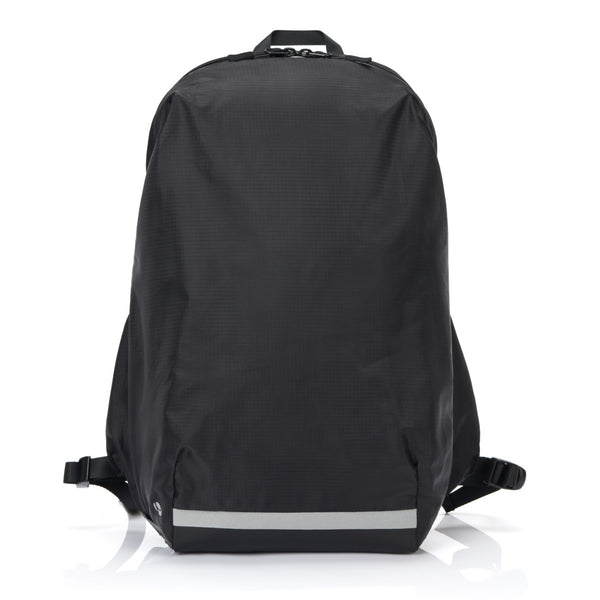
A 16 liter bag, for example, falls within the small daily-use range. The Purevave Black Travel Backpack 16L is listed with an internal pocket for a tablet or 13 inch laptop. It can suit a light daily load, but its capacity alone does not make it suitable for a larger laptop or a full set of school, gym, and lunch items.
Air travel and laptop use require an additional dimension check. A 30 liter backpack can still exceed an airline limit if it is unusually deep, and a 20 liter bag may not fit a particular computer if the sleeve is too narrow. Compare the actual object with the relevant compartment before making the final choice.
Leave a small amount of usable space so the bag closes normally and the contents do not press against the zippers. Avoid buying a much larger backpack for rare situations, since excess space can encourage unnecessary weight and allow the load to shift. If you are comparing construction and comfort as well as size, Purevave's guide on how to choose a backpack covers those additional factors.
Final Thoughts
There is no single standard backpack size that works for every person or purpose. Small backpacks commonly hold 10 to 20 liters, medium bags hold about 20 to 30 liters, and larger travel or outdoor packs often begin around 30 liters.
Use capacity to narrow the category, then check the outside dimensions, laptop sleeve, compartment shape, and fit. For airline travel, compare the measurements of the fully packed bag with the current carrier rules. The best backpack is large enough for the items you genuinely carry without adding unnecessary bulk.
Frequently Asked Questions
Does Backpack Capacity Include Exterior Pockets?
It depends on the manufacturer's testing method. Some stated capacities include exterior pockets, while others focus mainly on enclosed compartments. Check the product description or ask the brand when the distinction affects your choice.
What Does Expandable Backpack Capacity Mean?
An expandable backpack has a zipper, gusset, or panel that increases the available volume. The larger capacity applies only when that feature is open. Expansion can also increase the outside depth, so remeasure the packed bag before airline travel.
How Much Extra Space Should You Leave in a Backpack?
Leave enough room to close the zippers without pulling the fabric tightly. A small amount of space also makes items easier to reach and reduces pressure on electronics or hard containers. The exact amount depends on the load rather than a fixed percentage.
Are Children's Backpack Sizes Measured Differently?
The dimensions are still measured as height, width, and depth, but the correct fit should reflect the child's body and daily load. A larger capacity is not automatically better. Check strap adjustment, bag length, and the weight of the packed contents.