
What Size Duffel Bag Do You Need for a Weekend Trip?
Table of Contents
For most two or three-night trips, a 30 to 40-liter duffel bag is the most practical choice. It usually provides enough room for a few outfits, sleepwear, toiletries, one extra pair of shoes, and small travel essentials without becoming difficult to carry.
The ideal size changes with the season, your packing habits, and how you travel. A light summer weekend may fit in 20 to 30 liters, while winter clothing, sports gear, or a second pair of shoes can push the need closer to 40 or 50 liters.
A larger bag is not automatically more useful. Extra space encourages overpacking and may create problems with airline limits. This guide matches common duffel capacities with realistic weekend loads so you can choose a size that fits the trip instead of guessing.
Weekend Duffel Bag Size Guide
Capacity is usually listed in liters, while external dimensions tell you how the bag will fit in a car, train rack, locker, or airplane sizer. Consider both. Two duffels with the same capacity can have different shapes, openings, and usable space.
If you are comparing designs, Purevave's travel bag includes weekend bags and organizers for different travel routines.
|
Duffel capacity |
Best use |
Realistic weekend load |
Main tradeoff |
|---|---|---|---|
|
20 to 25 L |
One night or very light summer packing |
One outfit, sleepwear, toiletries, small electronics |
Limited room for shoes or layers |
|
25 to 30 L |
Two nights for a light packer |
Two outfits, sleepwear, toiletries, one compact pair of shoes |
Requires careful item selection |
|
30 to 40 L |
Most two or three-night trips |
Two or three outfits, toiletries, shoes, light layer, chargers |
Can become heavy when fully packed |
|
40 to 50 L |
Winter, sports, or gear-heavy weekends |
Bulky clothing, boots, equipment, or extra outfit |
May exceed some cabin limits when full |
|
More than 50 L |
Road trips or specialized equipment |
Large outerwear, multiple shoes, shared or outdoor gear |
Usually more than a normal weekend requires |
The 30 to 40-liter range is the best starting point for most travelers, but it is not a rule. Use the smaller end when you repeat clothing or wear bulky items in transit. Move toward 40 to 50 liters only when the trip genuinely requires extra volume.
Choose the Size for Your Trip Length and Packing Style
Counting nights gives a clearer estimate than counting calendar days. A Friday evening to Sunday afternoon trip is two nights, even though it touches three days. That normally means two daytime outfits, sleepwear, underwear, socks, and perhaps one flexible backup piece.
One Night With Minimal Essentials
A 20 to 25-liter duffel can work for one night when the weather is mild and the schedule is simple. Pack one change of clothing, sleepwear, a compact toiletry kit, and your charger. Wear the only pair of shoes and outer layer you need.
This size is also useful when the duffel supplements another bag. If your laptop, water bottle, and valuables are already in a backpack or tote, the duffel only needs to hold clothing and toiletries.
Two Nights With a Standard Packing List
For a typical two-night getaway, 25 to 35 liters is often enough. A traveler who packs two coordinated outfits, sleepwear, undergarments, a toiletry pouch, and one compact pair of shoes can usually stay near 30 liters.
Choose closer to 35 liters if you need a laptop, larger grooming products, or clothing for different activities. The extra space should make items easier to reach, not provide an excuse to add several unused backups.
Three Nights or a Flexible Weekend Schedule
A 35 to 40-liter duffel offers more flexibility for three nights, changing weather, or a dinner that requires different clothing. It can also accommodate a light sweater, workout set, or second pair of shoes when those items are part of the plan.
Travelers who repeat pants, layer tops, and use travel-size toiletries may still manage with 30 liters. Those who prefer a separate outfit for every day will usually be more comfortable near 40 liters.
Adjust the Capacity for What You Need to Pack
Trip length is only the first estimate. Shoes, coats, equipment, and rigid organizers often use more space than the basic clothing count suggests.
Clothing and Seasonal Layers
Light shirts, shorts, and thin dresses compress easily, so a summer weekend may fit in a 25 to 30-liter bag. Jeans, sweaters, and cold-weather layers take much more room. A winter trip may require 35 to 45 liters even when the number of outfits stays the same.
Wear the heaviest jacket and bulkiest footwear during transit when practical. Build outfits around a small color palette so tops and bottoms can be combined. This reduces volume without making the packing list feel restrictive.
Shoes and Activity Gear
An extra pair of shoes can occupy as much space as several shirts. If the trip includes hiking, a wedding, a gym session, or a beach day, list the required footwear and gear before selecting the bag.
Keep one main pair on your feet and pack only the second pair that serves a different purpose. Place shoes heel to toe in a separate compartment or shoe bag. If they force the duffel to bulge, move up one size rather than compressing delicate clothing around them.
Toiletries, Electronics, and Personal Items
A compact toiletry bag, phone charger, medication, and small accessories usually fit easily. Full-size bottles, hair tools, cameras, and laptops change the calculation. Rigid items leave less usable space around them than soft clothing.
Decide whether electronics will ride in the duffel or a separate personal item. Keep liquids contained and protect a laptop in a padded sleeve. If you bring a large toiletry kit, reduce clothing volume or choose a bag with a little more depth.
Check Dimensions, Comfort, and Travel Limits
Liters describe approximate volume, not whether the bag is comfortable or accepted by an airline. Before buying, compare the exterior dimensions, handle length, strap design, empty weight, and compartment layout with the way you will travel.
Compare External Dimensions With Capacity
A long, shallow weekender can hold folded clothing neatly but may be too long for an underseat limit. A deeper barrel duffel may offer similar volume but become awkward when packed. Check length, height, and depth instead of relying on a label such as small or medium.
Measure your usual packing load if possible. Arrange the items in a rectangular stack and note the approximate dimensions. This simple test helps show whether you need more length for folded clothing or more depth for shoes and organizers.
Make Sure the Full Bag Is Comfortable to Carry
A 40-liter duffel filled with dense shoes, a laptop, and toiletries can feel much heavier than the capacity suggests. Look for handles that join securely, an adjustable shoulder strap, and a shape that stays close to the body.
If the trip involves long walks or several train changes, a smaller load may be better than extra capacity. Carry the packed bag around the house before departure. Remove anything that feels unnecessary instead of assuming the discomfort will improve during the trip.
Check Airline Limits Before Flying
A duffel can be a carry-on when its packed dimensions and weight meet the operating airline's rules. The Federal Aviation Administration advises travelers to check directly with the airline because permitted size and item counts vary. Measure the bag when full, including bulging pockets and handles that do not fold flat.
For more detail, Purevave's guide to duffel bags as carry-ons or personal items explains the difference between overhead and underseat allowances. Never assume a 40-liter label guarantees cabin acceptance.
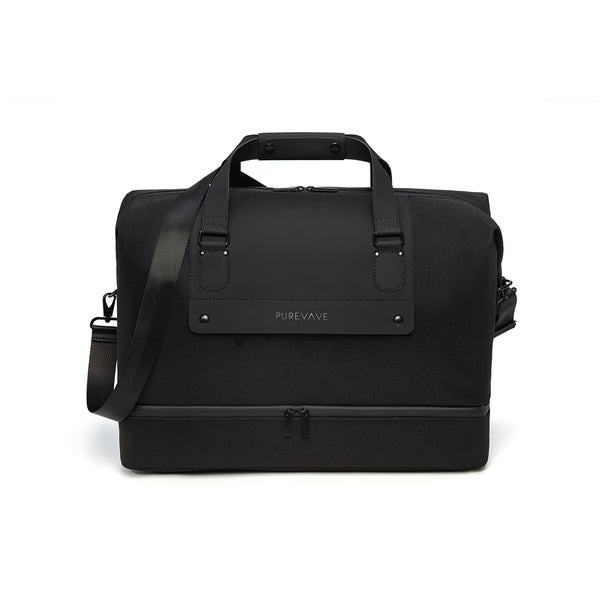
The Purevave GetawayPro Large Weekender Travel Duffel Bag measures 18.5 by 11.6 by 7.5 inches. It has a spacious main compartment, a separate ventilated shoe section, a luggage sleeve, and an adjustable shoulder strap. Its dimensions make it a practical example of a compact weekender, although travelers should always compare the packed bag with the current rules for their flight.
Once you choose the capacity, use the available room intentionally. Purevave's guide on how to pack a duffel bag covers clothing placement, shoe separation, liquids, and loading order.
Final Thoughts
Most travelers need a 30 to 40-liter duffel for a two or three-night weekend. Light packers and warm-weather travelers may be comfortable with 20 to 30 liters. Choose 40 to 50 liters when winter layers, sports equipment, boots, or several dress codes make the load bulkier.
Start with the actual items, not the largest bag that looks convenient. Count the nights, select the necessary shoes and layers, decide where electronics will go, and confirm the external dimensions. The right duffel should close without strain, remain comfortable to carry, and leave only a small amount of flexible space.
Frequently Asked Questions
Is a 20-Liter Duffel Big Enough for a Weekend?
It can be enough for one night or a very light two-night trip in warm weather. It works best when you wear your only shoes and jacket, use travel-size toiletries, and carry electronics elsewhere.
Is a 50-Liter Duffel Too Large for Two Nights?
For ordinary clothing, it is usually more space than necessary. It may make sense for winter layers, outdoor equipment, sports gear, or a road trip where airline limits do not matter.
Should a Weekend Duffel Have a Shoe Compartment?
It is useful when you regularly pack a second pair of shoes. A separate section keeps soles away from clean clothing, although it also occupies part of the bag's total interior space.
How Much Empty Space Should You Leave?
Leave enough room to close the zipper without pulling the sides together. A small amount of open space helps with access, souvenirs, and less precise packing on the return trip. If the bag collapses or items shift excessively, it is probably larger than needed.