
How to Pack a Duffel Bag: Save Space and Stay Organized
Table of Contents
To pack a duffel bag efficiently, start by choosing only what the trip requires. Roll or fold clothes according to the fabric, separate anything dirty or likely to leak, and place each group where it will be easy to reach.
A good packing system will not make the bag physically lighter, but it can help you use the available space, balance the load, and avoid unpacking everything to find one item. The same basic method works for a weekend away, a gym visit, or a longer trip.
Choose What to Pack
The easiest way to save space is to pack fewer unnecessary items. Make those decisions before you start filling the duffel bag.
Make a List Based on Your Trip
Build your list around the length of the trip, expected weather, planned activities, and access to laundry. A beach weekend and a business trip require different clothing, so avoid starting with a generic list that includes items you may never use.
Plan complete outfits where possible. If you have one formal dinner, bring one suitable outfit rather than several options. Choose clothing that can be worn in more than one combination, especially for longer trips.
Keep essential items separate from optional ones. Medication, identification, travel documents, necessary chargers, and weather-appropriate clothing should remain priorities even when space is limited.
Remove Unnecessary Extras
Review the list before packing and remove duplicates that do not serve a clear purpose. Extra shoes, several heavy outer layers, full-size toiletries, and too many outfit choices can quickly fill a duffel.
Ask whether you expect to use each item and whether another item can do the same job. One versatile jacket, for example, may be more useful than two jackets intended for similar conditions. Leave out low-priority “just in case” items, but do not remove anything essential to your health, safety, or travel plans.
Roll or Fold Clothes Based on the Item
Rolling works well for many soft garments, while folding is usually better for structured clothing and thicker pieces. Using both methods is more practical than applying one rule to everything.
Roll Soft, Casual Clothes
T-shirts, underwear, activewear, pajamas, leggings, and lightweight shorts can usually be rolled into compact bundles. Rolled items are easy to arrange along the sides of the bag or between larger pieces.
Roll garments smoothly without pulling them too tightly. This may reduce sharp fold lines in some soft knit fabrics, but it will not prevent every wrinkle. Rolling also organizes clothing into smaller bundles; it does not provide the same compression as a compression cube or vacuum bag.
Thick jeans, sweatshirts, and heavy knitwear may take up less awkward space when folded flat. Compare the shape of the garment with the available space instead of assuming everything should be rolled.
Fold Clothes That Wrinkle Easily
Dress shirts, blazers, trousers, and structured garments should usually be folded along their natural seams. Place them flat near the top of the main compartment, where they are less likely to be crushed by shoes or other dense items.
Avoid pressing too many garments into one stack. If wrinkle control is especially important, use a garment folder or place a light layer of tissue paper between folds. Hang the clothes soon after arriving so minor creases can relax.
Use Socks and Underwear to Fill Gaps
Small, soft items can fill narrow spaces around clothing organizers or along the edges of the bag. This uses areas that may otherwise remain empty without changing the shape of larger garments.
Clean socks may also be placed inside clean, dry shoes to use the interior space and help the shoes hold their shape. Keep the socks contained in a small pouch if you do not want them touching the inside of the shoes.
Do not force small items into every available gap. A little flexibility makes the bag easier to close and leaves room for dirty laundry or items added during the trip.

Separate Shoes, Liquids, and Used Clothes
Shoes, toiletries, and worn clothing should be contained before they enter the main compartment. This protects clean clothes from dirt, moisture, and accidental leaks.
Keep Shoes Away From Clean Clothing
Place shoes in a washable shoe bag or separate shoe compartment so the soles do not touch clean clothes. Position pairs heel to toe when that helps them fit more closely together.
Avoid assuming shoes must always sit at the absolute bottom of the bag. Their best position depends on the duffel’s shape, opening, and built-in compartments. The goal is to keep them stable, separated, and away from clothing that wrinkles easily.
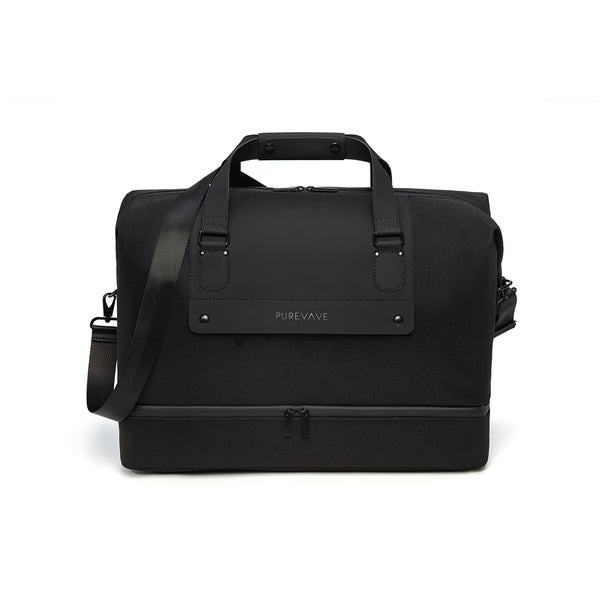
A duffel with a dedicated shoe section can simplify this step. The Purevave GetawayPro Large Weekender Travel Duffel Bag has a ventilated bottom compartment that keeps shoes separate from the main clothing area.
Place Toiletries in a Leak-Resistant Bag
Tighten every cap and check bottles for damage before packing. Place toiletries in a lined, leak-resistant bag that can contain small spills, and keep liquids away from electronics and important documents.
If you are flying from a U.S. airport with the duffel as a carry-on, containers of liquids, gels, creams, and aerosols generally must hold no more than 3.4 ounces or 100 milliliters and fit inside one quart-size bag. Review the current TSA liquids rule and any airline requirements before departure.
Keep the toiletry bag somewhere it will not be crushed. If it may need to come out during airport screening, place it near the top instead of burying it under clothing.
Bring a Bag for Dirty or Wet Items
Pack a lightweight laundry bag for worn clothes. This keeps them separate from unused outfits and makes unpacking easier when you return home.
Wet swimsuits, towels, or workout clothes need a water-resistant wet bag rather than an ordinary fabric laundry pouch. A wet bag is only a temporary storage solution. Remove and dry damp items as soon as possible to prevent odors and mildew.
Do not combine wet clothing with dry dirty laundry unless both will be washed immediately. Keeping them separate helps prevent moisture from spreading through the bag.
Load the Duffel in the Right Order
Once everything has been sorted and contained, load the bag according to weight, shape, and how often each item will be needed.
Build a Stable Base
Place dense, sturdy items near the lower center of the bag or close to the side carried against your body. Spread the weight evenly instead of concentrating it at one end. This helps reduce sagging and makes the duffel more comfortable to carry.
Use a separate shoe compartment if the bag has one. Otherwise, position contained shoes where they will stay stable without pressing into folded clothing. Avoid using bottles, fragile objects, or an overfilled toiletry bag as part of the base.
Lift the bag briefly after loading the heavier items. If one side pulls down noticeably, adjust their position before adding the remaining contents.
Place Clothes in the Main Section
Arrange rolled clothes through the main compartment, using their flexible shape to fit around larger pieces. Place thick folded garments where they can lie flat without creating a high lump on one side.
Add wrinkle-prone clothing near the top. Do not pack so tightly that the zipper must be pulled closed under strain. Overfilling can distort a soft duffel, make items harder to find, and push the packed dimensions beyond an airline’s limit.
If you are using packing cubes, choose a few that fit the shape of the bag instead of filling it with many small organizers. Leave some flexible space around them for irregularly shaped items.
Keep Travel Essentials Within Reach
Place medication, travel documents, headphones, and other frequently used items in a secure zippered pocket or near the top of the bag. A passport or wallet should be easy for you to reach but should not sit loose in an open exterior pocket.
Protect chargers and small electronics in a separate pouch so cables do not become tangled with clothing. Keep power banks and spare lithium batteries accessible in your carry-on, since they should not be placed in checked baggage.
Before closing the bag, confirm that liquids are contained, the weight feels balanced, and important items can be reached without removing the main clothing layer. Leave some room for laundry, purchases, or a less carefully packed return trip.
How the Right Duffel Bag Makes Packing Easier
Packing technique matters, but the design of the bag also affects how easily you can organize and reach your belongings. A good duffel bag should have a wide opening, a roomy main compartment, and separate storage for items that should not touch clean clothes.
Useful pockets give toiletries, chargers, and travel documents their own places instead of letting them disappear beneath clothing. A dedicated shoe compartment can also keep footwear away from the main packing area, while a stable base helps the bag hold its shape as you load it.
The Purevave GetawayPro Large Weekender Travel Duffel Bag includes a spacious main compartment, a ventilated bottom section for shoes, and a luggage sleeve for attaching the bag to a rolling suitcase. These features do not replace careful packing, but they make it easier to separate items, use the available space, and stay organized throughout the trip.
Final Thoughts
Efficient duffel packing depends more on planning than on squeezing in as much as possible. Bring what the trip requires, use the right method for each type of clothing, contain shoes and liquids, and distribute the weight carefully. A small amount of unused space is usually better than a bag that is difficult to close, carry, or organize.
FAQs
Are Packing Cubes Useful in a Duffel Bag?
Yes. Regular packing cubes create sections inside a soft duffel and make groups of clothing easier to find. Compression cubes may also reduce the volume of soft garments, but ordinary cubes mainly organize rather than compress.
Choose a small number of cubes that fit the bag’s dimensions. Too many rigid or poorly sized organizers can leave unusable spaces around them.
Can You Use a Duffel Bag as a Carry-On?
Many small and medium duffel bags can be used as carry-ons, but approval depends on the packed size, weight, airline, fare, and aircraft. Measure the bag after packing because its flexible sides may expand.
Some U.S. airlines use a maximum carry-on size around 22 by 14 by 9 inches, but this is not a universal rule. Always check the operating airline’s complete requirements before flying.
How Do You Pack a Laptop Safely in a Duffel Bag?
Place the laptop in a padded sleeve, then position it flat where the bag will not bend or place pressure on the screen. Keep it separate from shoes, liquids, and dense objects.
A dedicated padded laptop compartment offers better protection than loose clothing alone. If the duffel has no suitable compartment, carry the computer in a separate protective bag when possible.
More reading