
Is a Duffel Bag a Carry-On or Personal Item? Airline Size Rules Explained
Table of Contents
Yes. A duffel bag can be a carry-on when it fits the airline's overhead-bin limits, and a smaller duffel can be a personal item when it fits completely under the seat. Airlines classify the bag by its packed size and storage location, not by the word “duffel.”
The answer changes with the airline, fare, aircraft, and dimensions of the fully packed bag. A flexible duffel may be easier to fit than a rigid suitcase, but soft sides do not excuse an oversized load.
The most important distinction is where the bag must go. Carry-ons normally use the overhead bin. Personal items belong under the seat and are usually smaller. This guide explains both standards, compares current US airline limits, and shows how to measure and pack a duffel before leaving for the airport.
Can a Duffel Bag Be Used as a Carry-On?
A duffel can be your main carry-on if its filled dimensions stay within the operating airline's limit and your fare includes an overhead bag. The shape does not have to resemble a rolling suitcase. Delta even refers to a duffel as an example of an overnight bag that may be stored in the overhead bin.
If you are comparing formats before a trip, Purevave's travel bag collection provides examples of weekend bags, backpacks, organizers, and other options designed for travel routines.
For many major US airlines, a common maximum is 22 by 14 by 9 inches, but it is not universal. International airlines may also impose lower weight limits even when a bag meets the dimensional maximum.
The Packed Duffel Must Meet Carry-On Size Limits
Measure the bag after packing it. Include bulging sides, the bottom compartment, handles that do not fold flat, and any attached pockets. A duffel advertised as 20 inches long can still fail a 22 by 14 by 9-inch limit if it expands beyond the permitted width or depth.
Soft construction may allow slight compression, but do not count on forcing a tightly packed duffel into the frame.
Your Fare Must Include an Overhead Carry-On
Size is only one part of the decision. Some fares include an overhead carry-on, while others include only a personal item or charge separately for the larger bag. Frontier and Spirit, for example, include a personal item with standard eligibility but may require a purchased allowance or qualifying bundle for a carry-on.
Read the baggage terms attached to your reservation. Codeshare and partner flights can follow the rules of the operating airline.
A Compliant Duffel May Still Be Gate Checked
A correctly sized duffel may still be gate checked when overhead bins fill or the aircraft has limited storage. The Federal Aviation Administration's carry-on guidance advises passengers to check with the airline because cabin space and restrictions can vary.
Keep medication, travel documents, electronics, batteries, and valuables in a removable pouch or smaller personal item in case the duffel is gate checked.
Can a Duffel Bag Be a Personal Item?
A small duffel can count as a personal item if it stays within the airline's smaller allowance and fits fully under the seat in front of you. The bag should not block your feet, extend into the aisle, or require overhead-bin space.
Personal-item limits vary. Some airlines publish exact dimensions, while others state that the item must fit under the seat. The comparison below shows the current policies reviewed for this guide.
The Duffel Must Fit Completely Under the Seat
The bag should slide into the available space without extending into the aisle or blocking the area around your feet. Compact gym bags and soft overnight bags are the most realistic candidates. Long barrel-shaped duffels and large weekenders are often too long for underseat storage.
The Packed Bag Must Meet Personal Item Dimensions
A bag that fits when empty may exceed the limit after packing. Measure the full exterior after adding clothing, shoes, and toiletries, since the soft sides and top can expand.
Underpacking can help a soft bag fit, but its external dimensions still need to meet the airline's rules. Avoid filling exterior pockets until they protrude.
A Purse or Backpack May Count as a Second Item
If the duffel is your personal item, it uses that allowance. A separate purse, laptop bag, tote, or backpack may count as another item unless the airline lists a specific exemption. Likewise, if the duffel is your carry-on, you may bring only the additional personal item allowed by your fare.
The simplest setup is a carry-on duffel overhead and one compact bag under the seat. For personal-item-only travel, start with the airline's published dimensions instead of trying to shrink a weekender at the gate.
For a broader explanation of the two allowances, Purevave's personal item versus carry-on guide covers their storage locations, typical sizes, and fare considerations.
Duffel Bag Size Limits on Major US Airlines
These limits were reviewed on September 23, 2026. Policies, fees, and fare benefits can change, so open the linked airline page again before travel. Measurements include the bag's external shape and any parts the airline specifies, such as handles, wheels, or straps.
|
Airline |
Carry-on maximum |
Personal-item maximum |
Important note |
|---|---|---|---|
|
22 x 14 x 9 in |
18 x 14 x 8 in |
Carry-on must fit the sizer and overhead bin or under the seat |
|
|
22 x 14 x 9 in |
Must fit under the seat |
Some small aircraft have limited overhead space |
|
|
24 x 16 x 10 in |
Must fit under the seat |
Partner-airline rules may differ |
|
|
22 x 14 x 9 in |
17 x 13 x 8 in |
Current page states one carry-on and one personal item on all fares |
|
|
24 x 16 x 10 in, up to 35 lb |
18 x 14 x 8 in, up to 35 lb |
Personal item is included; carry-on inclusion depends on purchase or benefits |
|
|
22 x 18 x 10 in |
18 x 14 x 8 in |
Carry-on must be included or purchased when available |
Do not choose a duffel only because its total linear inches look acceptable. Airlines usually apply each side limit separately. A bag measuring 23 by 12 by 8 inches does not meet a 22-inch length maximum even though its overall total may look similar.
How to Check Whether Your Duffel Qualifies
Confirm the operating airline and ticket allowance first, then measure the bag as it will be boarded.
Check the Operating Airline and Your Fare
Find the airline operating each segment. Confirm the dimensional limit and whether your fare includes an overhead carry-on. A marketing airline's rules may not control a partner-operated flight.
Measure the Fully Packed Duffel
Set the filled duffel on a flat surface without pressing down on it. Measure the longest end-to-end side, the base-to-top height, and the front-to-back depth at the widest points. Include any firm handle mounts or pockets that cannot compress.
Compare each number with the airline's published limit. If a measurement is close, remove a few items and test the bag in a cardboard outline or tape-marked space at home. Leave a small margin because fabric can shift during the trip.
Prevent Soft Sides and Pockets From Bulging
Fold or roll clothing into compact layers and place dense items near the base. Use one or two packing cubes instead of stuffing every corner. Keep shoes in a separate compartment or bag, and place liquids where they remain upright and easy to remove.
Do not tighten compression straps so aggressively that fragile contents are damaged. The goal is a stable rectangular profile that is easy to lift and stow. Purevave's guide on how to pack a duffel bag provides a fuller packing method for saving space and separating categories.
Keep Security Screening Items Easy to Reach
Passing the airline sizer does not guarantee every packed item can go through security. For US checkpoints, the TSA's 3-1-1 liquids rule generally limits liquids, aerosols, gels, creams, and pastes to containers of 3.4 ounces or less inside one quart-size clear zip-top bag, with exceptions for medically necessary items. Use the TSA “What Can I Bring?” tool for specific objects.
Keep the liquids bag and large electronics accessible. A wide-opening duffel is convenient only when you can reach screening items without unpacking clothing across the security area.
The Purevave GetawayPro Large Weekender Travel Duffel Bag measures 18.5 by 11.6 by 7.5 inches. Those listed dimensions fall within the carry-on maximums in the comparison table, although final acceptance always depends on the packed bag, fare, operating airline, and aircraft.
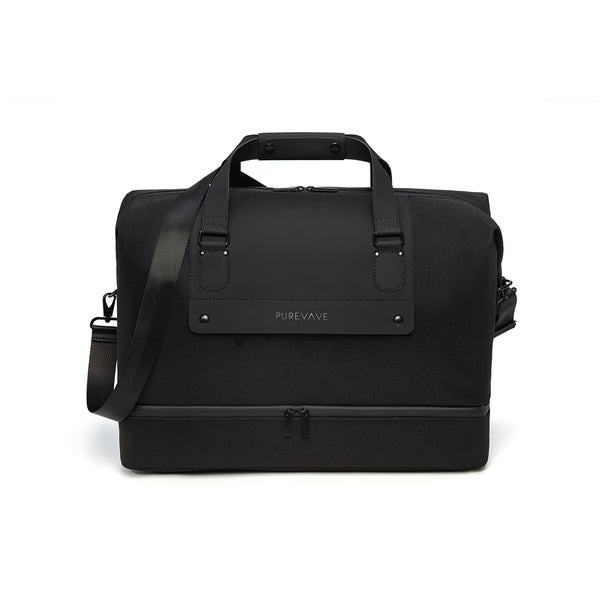
Its 18.5-inch length exceeds the published personal-item maximums for American, JetBlue, Frontier, and Spirit, so it should not be presented as a guaranteed personal item on those airlines. It is better suited to the carry-on role. The bag also has a separate ventilated shoe compartment and a luggage sleeve, which can be useful for a short trip with a rolling suitcase.
Final Thoughts
A duffel bag can be either a carry-on or a personal item, but it cannot be classified by style alone. Treat it as a carry-on when it fits the overhead limit and your fare includes that allowance. Treat it as a personal item only when the packed bag meets the smaller limit and fits completely under the seat.
Check the operating airline shortly before departure, measure the filled bag at its widest points, and leave room for the fabric to compress naturally. When a duffel is close to the limit, packing less is safer than hoping a gate agent will overlook the extra size.
Frequently Asked Questions
Does a Duffel Bag Need Wheels to Be a Carry-On?
No. A carry-on may be soft-sided and wheel-free. It still needs to meet the airline's dimensions, fit in the approved storage area, and be light enough for you to lift safely into the overhead bin when required.
Can You Put a Duffel Bag in the Overhead Bin Sideways?
It depends on the aircraft, available space, and crew instructions. A soft duffel may fit in more than one orientation, but it should not prevent the bin from closing or crowd out other bags. Follow any placement direction given during boarding.
Will an Airline Measure a Soft Duffel Bag?
It may. Airlines can require any bag to fit inside a sizer, especially when it looks overfilled or a fare includes only a personal item. Measure at home and assume the largest packed dimensions will count.
What Happens if a Duffel Is Too Large at the Gate?
The airline may require it to be checked and may charge the applicable gate or baggage fee. The result depends on the airline, fare, route, and reason for checking. Move valuables and cabin-only items to your personal item before surrendering the bag.