
Fanny Pack vs. Crossbody Bag: Which One Fits Your Needs?
Table of Contents
A fanny pack is usually the better choice for a very small load, active movement, and a secure fit at the waist. A crossbody bag works better when you want more size options, easier access near the chest or hip, and a style that can move from casual errands to travel or dining.
The right choice depends on what you carry, where you want the bag to sit, and how much you will move. Strap length and bag shape also matter because some modern waist packs can be worn across the chest, while many crossbody bags cannot sit comfortably around the waist.
The two names are not interchangeable. A fanny pack is defined mainly by its waist-level design, while a crossbody bag is defined by a strap that runs diagonally across the torso. A convertible bag may serve both roles, but it still needs the right strap range and attachment points.
This guide compares fit, capacity, access, comfort, security, and everyday uses so you can choose the design that suits your routine.
Fanny Pack and Crossbody Bag Differences at a Glance
Both bags keep small essentials close and leave your hands free. Their main differences come from where they rest and how the strap supports the load. Purevave's crossbody sling bag includes compact styles that show how modern designs can blur the line between the two categories.
|
Feature |
Fanny pack |
Better choice when |
|
|---|---|---|---|
|
Wearing position |
Around the waist or hips |
Across the torso at the chest, back, or hip |
Choose the position that feels easiest to reach and most stable |
|
Typical capacity |
Small and compact |
Small to medium, with more shape options |
Crossbody suits a slightly larger daily load |
|
Weight support |
Hips and waist |
One shoulder and the torso |
Fanny packs often feel better with a very light active load |
|
Access |
Fast at the front of the waist |
Fast when worn at the chest or front hip |
Both work well if the opening stays upright |
|
Style range |
Casual, sporty, or streetwear |
Sporty, casual, structured, or dressy |
Crossbody offers more formal options |
|
Movement |
Close fit for walking and some activities |
Stable when fitted close, but may swing if loose |
Fanny packs often move less during active use |
A fanny pack, also called a waist pack, hip pack, or belt bag, fastens around the waist. A crossbody bag uses a longer diagonal strap and may be a purse, phone pouch, camera bag, messenger, or sling.
When a fanny pack is worn diagonally across the chest, it functions as a crossbody bag. Its compact body and buckle strap still come from waist-pack design, which explains why some product names use both terms.
How Fit and Carry Position Change the Experience
Where a bag sits affects comfort, access, and how much it moves. A secure fit is more useful than the category name, especially when the bag will be worn for several hours.
Waist and Hip Carry
A fanny pack places a small load around the waist or upper hips, keeping the shoulders free and essentials within reach.
Fit the strap snugly enough to limit bouncing without making it restrictive. The pack should not interfere with bending, sitting, or the waistband of your clothing. A bag worn too low may swing, while one pulled too tightly can feel uncomfortable after a meal or during a long day.
Chest and Hip Crossbody Carry
A crossbody bag can sit at the chest, behind the shoulder, or near the opposite hip. Chest carry keeps the opening visible, while hip carry suits wider bags and a more traditional look.
The strap should cross the torso without rubbing the neck. Shorten it for a close, stable fit when walking through a crowd. Lengthen it when the bag needs to sit below a jacket or at the hip. The guide on how to wear a sling bag comfortably explains how strap position changes access and pressure.
Weight and Shoulder Comfort
Neither design is intended for a heavy load. A waist pack can balance a few small items, but a bulky pouch may press into the body. A crossbody bag can carry more, yet its weight still pulls from one shoulder.
If you need a tablet, large water bottle, books, or several hours of supplies, a backpack may distribute the weight better. For a small to moderate load, choose a wider strap, keep hard objects away from the body, and remove items that are rarely used.
Which Bag Works Better for Different Needs?
The best design changes with the activity. Think about what you need to reach, how much space the items require, and whether the bag must stay close during movement.
Everyday Errands and Minimal Carry
A fanny pack is often enough for a phone, slim wallet, keys, and earbuds. Its low bulk suits dog walks, grocery runs, coffee stops, and short trips.
Choose a crossbody bag if you also carry sunglasses, a small notebook, charger, medication, or other personal items. Its wider range of sizes makes it easier to add space without jumping to a tote or backpack.
Travel and Crowded Places
Both styles work for travel. A waist pack keeps documents and a phone close while you handle luggage. A front-worn crossbody provides similar control with more room for a power bank, sunglasses, and other small items.
Neither bag prevents theft by itself. Use a zippered closure, keep valuables in the pocket closest to your body, and avoid leaving the bag open after taking out your phone. A larger crossbody may count as a separate personal item on a flight, so check the airline's current policy before relying on it as an extra bag.
Festivals, Walking, and Active Days
A fanny pack usually stays close during brisk walking, dancing, or an outdoor event. Its compact size may help with venue limits, but policies vary.
A fitted crossbody sling suits someone who needs more space or prefers chest carry. A loose purse-style bag can swing during fast movement.
Work, Dining, and Polished Outfits
For professional or dressier settings, a structured crossbody or small messenger usually looks more polished and holds work accessories more easily.
A belt bag can still suit casual offices or streetwear. Consider workplace expectations, outfit style, and your load.
How to Choose Between a Fanny Pack and Crossbody Bag
Choose from your actual carry list rather than a trend or product name.
Match the Capacity to Your Essentials
Gather your daily items before shopping. A waist pack should hold them without a strained zipper or hard corners pressing into the body. If everything must be stacked, move to a larger crossbody.
A roomy bag can encourage overpacking and increase one-sided weight. Allow only a little extra capacity beyond your regular load.
Test the Full Strap Range
Check minimum and maximum strap lengths. A fanny pack must tighten for the waist and expand over clothing. A crossbody strap must suit your torso, preferred position, and seasonal layers.
For a convertible design, test both positions. The pouch should remain upright around the waist and lie flat against the chest. The buckle should be easy to reach but should not press into the neck, ribs, or spine.
Compare Openings, Pockets, and Materials
The main zipper should face upward in your usual position. Separate pockets keep keys away from a phone, but too many tiny sections can reduce usable space.
Lightweight nylon and polyester suit casual use and travel. Structured synthetic materials or leather may fit polished outfits but can add weight. Water-repellent or water-resistant fabric can help with light moisture, but it does not make zippers and seams waterproof.
Consider a Convertible Design
A convertible bag can provide waist carry for a walk and chest carry in crowded transportation. It adds value only when the strap adjusts securely in both positions.
The Purevave Fashion Female Sling Bag is one example. Its adjustable strap supports sling, crossbody, shoulder, fanny, or waist wear. The 9.1 by 3.5 by 4.9 inch washed nylon bag has front, back, and main storage areas. Judge it by fit rather than the gender wording in its name.
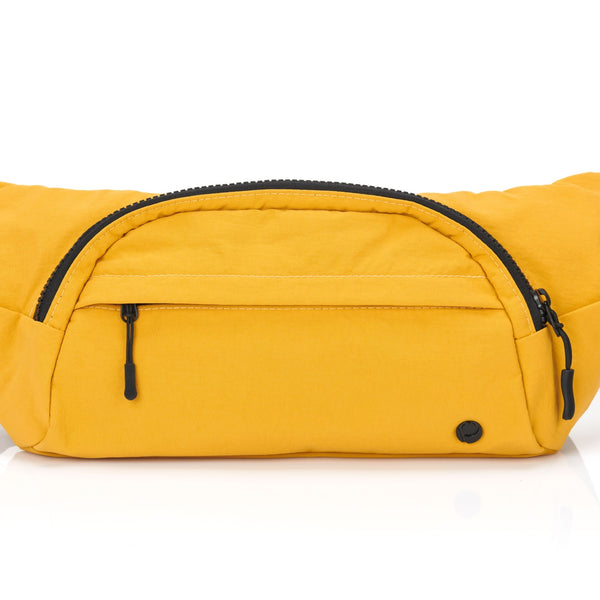
If neither compact option holds your regular load comfortably, compare a crossbody sling bag with a backpack before choosing a larger one-shoulder bag.
Final Thoughts
Choose a fanny pack for the basics, shoulder-free carry, and a close fit during movement. Choose a crossbody bag for more capacity, style choices, and flexible placement.
The categories can overlap. Focus on capacity, strap range, opening direction, and comfort in your usual position. The better bag keeps essentials secure and accessible without unnecessary bulk or pressure.
Frequently Asked Questions
Why Is It Called a Fanny Pack in the United States?
The American name refers to wearing the pouch at the back of the waist. In the United Kingdom and other regions, waist bag, belt bag, or bum bag is more common.
Can You Wear a Fanny Pack Under a Jacket?
Yes, if the pack is slim and the jacket has room. It should not restrict movement or force the zipper outward. A bulky pack is usually better over the jacket.
Which Bag Is Easier to Use While Riding a Bike?
A compact waist pack can stay stable if it does not affect pedaling. A fitted sling may also work, but a loose bag can shift. Use cycling-specific storage for heavier gear.