
What Bags Are Allowed at Concerts? Clear Bag, Sling Bag, and Size Rules Explained
Table of Contents
Most concerts allow a small clear bag, a compact clutch, or another small bag that meets the event's stated size limit. Some venues also allow sling bags and fanny packs, but their names do not make them automatically acceptable.
The answer changes with the venue, event organizer, and performer. One arena may require a fully clear bag, while another may accept a small non-clear purse. A no-bag event may permit only a wallet or a documented medical exception.
The most common mistake is relying on a familiar 12 by 6 by 12 inch limit without reading the full rule. That measurement often applies only to clear bags. Non-clear bags usually have a much smaller allowance.
This guide explains which bag types are commonly accepted, the conditions each one must meet, the size rules to check, and the bags most likely to be refused.
Bags Commonly Allowed at Concerts
The safest choice is a bag that matches both the permitted style and all three exterior measurements. Security staff usually judge the actual bag at the entrance, not the product name used by the seller.
|
Bag type |
When it is commonly allowed |
What to check |
|---|---|---|
|
Clear tote |
At venues with a clear bag policy |
Material, maximum width, height, and depth |
|
Clear crossbody bag |
When fully transparent bags are permitted |
Body transparency, trim, pockets, and size |
|
Small clutch or wristlet |
Under a non-clear bag exception |
The smaller clutch measurements |
|
Small sling or fanny pack |
At size-only venues or when it fits an exception |
Exterior dimensions and material |
|
One-gallon freezer bag |
At venues that name it as an option |
Closure, capacity, and number of bags allowed |
Clear Tote Bags
A clear plastic, vinyl, or PVC tote is accepted at many stadiums, arenas, and outdoor concert venues. A common maximum is 12 inches wide by 6 inches deep by 12 inches high. However, this is only a common standard, not a universal rule.
The main compartment should be easy to see through. Large printed graphics, dark tint, holographic material, stickers, or an opaque inner purse may cause problems at stricter events. Small trim and a modest logo may be accepted, but the event policy should settle that question.
A zipper helps keep a phone and wallet inside the bag. It does not affect approval unless it increases the exterior measurements.
Clear Crossbody Bags
A clear crossbody bag can be easier to carry than an open tote. It keeps both hands free and may hold a phone, cardholder, keys, and a few personal items without unnecessary space.
It must still meet the same clear bag requirements. Check whether the front and back panels are transparent, whether an opaque pocket blocks the contents, and whether the bag stays within the limit when filled. A clear front panel attached to an opaque body may not count as a fully clear bag.
Small Clutches and Wristlets
Many clear bag policies include an exception for one small non-clear clutch, wallet, or wristlet. This option provides more privacy, but its permitted measurements are usually much smaller than those for a clear tote.
For example, a current SoFi Stadium event policy lists clear bags up to 12 by 6 by 12 inches and non-clear clutches up to 4.5 by 6.5 inches. Albany Med Health System at SPAC lists the same clear bag maximum but permits a non-clear clutch up to 6 by 9 inches. The different clutch limits show why a bag accepted at one show may be rejected at another.
Do not assume a removable strap turns a purse into an approved clutch. Security normally checks the complete bag and its exterior size.
Small Sling Bags and Fanny Packs
Small sling bags, belt bags, and fanny packs are often accepted at venues with a size-only policy. At a clear bag event, an opaque version must usually fit the smaller non-clear exception. Many everyday sling bags are too long or too deep even when they appear compact against the body.
Purevave's sling bag collection includes several compact carrying styles, but each product must be compared with the rule for the exact concert. The Purevave Fashion Female Sling Bag, for example, measures 9.1 by 3.5 by 4.9 inches. It may suit a venue with a generous size-only limit, but its opaque nylon does not meet a clear bag requirement. Its 9.1 inch length also exceeds a 9 inch clutch limit.
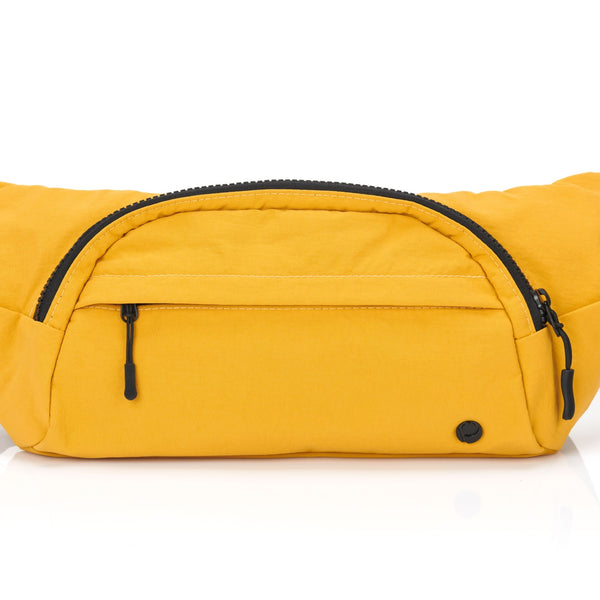
Wearing a sling across the chest, around the waist, or under a jacket does not turn it into clothing. It remains a bag and is subject to inspection.
How Concert Bag Policies Affect What You Can Bring
Venue policies usually fall into three broad groups. Identify the policy type first, then choose a bag within its measurements. Ticketmaster recommends checking the order details and official venue website because allowed items differ by event and location.
Clear Bag Policies
A clear bag policy normally allows one transparent bag up to a stated size and may include one small non-clear clutch. Some policies also name a one-gallon clear freezer bag as an acceptable alternative.
Read the material rules as carefully as the dimensions. Some events prohibit tint, patterns, holographic finishes, or stickers because they reduce visibility. An oversized clear backpack can still be rejected even though its contents are visible.
Size-Only Policies
A size-only policy may accept both clear and opaque bags as long as they remain below the maximum dimensions. Small purses, crossbody bags, slings, and fanny packs may all qualify under this system.
Do not treat a generous general venue policy as a promise for every show. Madison Square Garden's current FAQ, for example, focuses on whether a bag fits comfortably under the seat and prohibits oversized bags larger than 22 by 14 by 9 inches. The venue also notes that individual events can have different requirements.
No-Bag Policies
A no-bag policy may allow only a small wallet, a phone case, or no container at all. A clear bag is not automatically permitted at these events. Medical, accessibility, and sometimes diaper bag exceptions may use a separate inspection process.
If an event advertises a no-bag express entrance, that does not always mean every other entrance accepts bags. Confirm whether bags are permitted anywhere in the venue before traveling.
Concert Bag Size Rules
Bag limits normally use width, height, and depth. All three numbers matter. Capacity in liters does not prove that a bag meets an exterior size rule.
Common Clear Bag Dimensions
The best-known clear bag limit is 12 by 6 by 12 inches. Some venues use smaller dimensions or change the order in which the measurements appear. Match each measurement to the venue's diagram when one is provided.
The limit is usually a maximum, not a target. Choosing a slightly smaller bag reduces uncertainty at the gate, especially when seams, trim, or pockets extend beyond the main body.
Common Non-Clear Bag Dimensions
Non-clear clutch limits vary considerably. Examples include 4.5 by 6.5 inches and 6 by 9 inches. Some policies specify only length and height because the accepted item is expected to be flat. Others include a depth limit.
Terms such as small purse, palm-sized wallet, and clutch are not precise enough by themselves. Use the listed numbers whenever they are available.
How to Measure Your Bag
Empty the bag and place it on a flat surface. Measure the widest horizontal point, the full height of the body, and the deepest point from front to back. Include rigid trim, fixed handles, buckles, and exterior pockets when they increase the outline. An adjustable shoulder strap that hangs freely is normally not part of the body measurement.
Pack the essentials, close every zipper, and measure again. Soft slings and pouches can expand beyond their listed depth. If the packed bag sits exactly on the limit, choose a smaller one rather than depending on how an individual security worker measures it.
Bags That Are Often Not Allowed
Certain bag types create frequent problems because they are too large, difficult to inspect, or covered by a separate prohibited category. A small version is not necessarily banned everywhere, but it needs explicit support from the event policy.
Backpacks and Large Sling Backpacks
Many concerts prohibit standard backpacks, mini backpacks, hydration backpacks, and large sling backpacks. Multiple compartments take longer to inspect, and even a compact backpack may fail a policy that allows only totes, clutches, or wallets.
A clear backpack can also be refused when the policy lists only clear totes or when the backpack exceeds the permitted depth. Do not use transparency as the only test.
Oversized Totes and Large Purses
Daily totes, work bags, and large shoulder purses often exceed concert limits. A flexible tote still counts at its full packed size. Folding or rolling the top does not necessarily make it compliant.
Shopping bags brought from outside may also count as bags. Merchandise packaging issued after entry can follow different rules, so do not assume you may bring an empty opaque tote for purchases.
Camera Bags and Structured Cases
Camera bags, binocular cases, hard cases, and equipment pouches may be prohibited even when they are small enough. Many artists restrict professional cameras, detachable lenses, and recording equipment separately from the general bag policy.
Check both the bag rules and the prohibited-items list. If the event permits a compact camera but not a camera case, carry the camera only in an approved bag with suitable protection.
Final Thoughts
Clear totes, clear crossbody bags, small clutches, and some compact slings or fanny packs are the bag types most commonly allowed at concerts. The correct choice depends on whether the event uses a clear bag policy, a size-only rule, or a no-bag policy.
Check the official page for the specific concert, not just the venue's general FAQ. Compare the bag's material and all exterior measurements with the stated rule. When the wording is unclear, contact guest services before the show. The smallest clearly compliant option is usually the safest choice.
Frequently Asked Questions
Are Medical Bags Allowed at Concerts?
Many venues allow medically necessary bags even when ordinary bags are restricted. The bag may require additional inspection or entry through a designated gate. Contact guest services in advance to confirm the allowed size, required documentation, and procedure for medication or cooling supplies.
Are Diaper Bags Allowed at Concerts?
Some venues make an exception for diaper bags when a child is present, while others require baby supplies to fit inside an approved clear bag. Policies may also list strollers and breast pumps separately. Check the event page and ask the venue if the wording is unclear.
Does a Concert Bag Have to Be Completely Clear?
Only when the event uses a clear bag policy or specifies a transparent material. Small trim or a logo may be acceptable, but tinted panels, large prints, opaque pockets, and bags placed inside the clear bag can violate stricter rules. Follow the event's description of visibility rather than the product label alone.
What Happens if Your Bag Is Too Large?
Security may direct you to return the bag to a vehicle, use a paid locker or bag-check service, or leave the item behind. Storage is not guaranteed, especially for guests arriving by public transit or rideshare. Check for official lockers before traveling and do not expect the venue to hold a rejected bag.