
How to Pack a Suit in a Backpack to Avoid Wrinkles
Table of Contents
Yes, you can pack a suit in a backpack while reducing the risk of deep wrinkles by using a shoulder-nesting fold and a smooth protective layer, such as a plastic garment bag. Suit jackets can wrinkle or lose their shape when folded too tightly or pressed against hard items inside a soft backpack.
A common misconception is that rolling a suit jacket always prevents creasing. Rolling is not always wrong, but tightly rolling a structured jacket can compress the shoulders and lapels. The shoulder-nesting fold is usually a safer choice for a traditional suit jacket.
This guide breaks down a step-by-step suit folding method, the right packing order, bag selection features, and quick ways to remove wrinkles after arrival to help your attire stay sharp.
Can You Pack a Suit Safely?
You can carry a suit in a backpack while reducing the risk of deep wrinkles, but a few light creases may still appear. The key lies in minimizing fabric friction and avoiding sharp folds across structured areas like the lapels and shoulders. While a traditional garment bag is ideal, carefully folding the suit and keeping it away from hard objects can help it arrive in good condition.
Prepare Your Suit and Backpack
Before folding anything, prepare both your garments and your bag to ensure a smooth packing process.
Start with a clean, fully pressed suit, as packing a garment that already has mild creases will only set those wrinkles deeper during transit. Gather a thin plastic dry-cleaning bag or a sheet of tissue paper, which creates a protective barrier that lets fabric layers slide rather than catch and crease. Make sure the suit is completely dry before placing it in plastic. Finally, clear out your backpack by laying it completely flat on a table and removing any loose items from the main compartment.

Pack Your Suit Step by Step
Following these simple steps protects the suit's construction while maximizing space.
Empty the Suit Pockets
Remove everything from the interior and exterior pockets of your suit jacket and trousers. Items like keys, pens, wallets, or loose change create bulges that cause uneven pressure, stretching the fabric and imprinting deep, stubborn wrinkles into the wool.
Fold the Suit Jacket
Begin by laying the unbuttoned jacket face down on a clean surface. Gently turn the left shoulder inside out.
Next, tuck the right shoulder directly into the inverted left shoulder so the two shoulders nest neatly together. Align the lapels and front edges so the jacket is folded in half vertically, then fold it horizontally once if needed by bringing the bottom hem up toward the collar. To finish, slip the entire folded jacket inside a plastic dry-cleaning bag to reduce friction against other garments.
Fold the Trousers
Hold the trousers by the hem and waist, aligning the front inseams and outer seams along their natural crease before laying them flat on a table. Fold the legs in half crosswise, bringing the cuffs directly up to the waistband.
Pack the Shirt and Tie
For the dress shirt, button every other button and lay it face down. Fold the sleeves across the back, bring the side edges toward the center, and fold the bottom hem up toward the collar. To help the collar hold its shape, place a pair of clean, rolled socks inside it. Loosely roll the tie from the narrow end and place it in a clean accessory pouch.
Place Everything in the Backpack
Positioning your suit bundle inside the backpack requires careful placement. Keep shoes, dopp kits, chargers, and other hard items in separate compartments. Place the folded suit bundle flat over a layer of light, soft items like T-shirts and socks, away from rigid edges and direct pressure.
If you are using a laptop backpack, keep the computer inside its padded compartment and make sure its rigid edges do not press directly against the folded suit. Finally, lay your folded dress shirt directly on top of or alongside the suit bundle to keep pressure even.
Keep Your Suit Wrinkle-Free
Even a perfect fold can fail if the rest of your backpack is packed carelessly.
Keep Heavy Items Separate
Never place heavy, dense, or hard objects on top of your suit bundle. Shoes, water bottles, and bulky tech pouches can crush the shoulders and press hard folds into the suit fabric. Keep these items anchored in separate compartments or away from the suit.
Avoid Overpacking the Backpack
Overstuffing a backpack exerts continuous compression on everything inside. That tight pressure forces any minor bend in the suit to become a sharp crease. Leaving a bit of breathing room in your bag ensures the fabric isn't squeezed excessively during transit.
Choose a Suit-Friendly Backpack
Not all backpacks are built for tailored clothing. If you travel frequently with business wear, a professional backpack should provide enough room for folded garments while keeping shoes, electronics, and other hard items in separate compartments.
Pick a Clamshell Opening
A backpack with a clamshell or 180-degree panel-loading opening lays completely flat like a suitcase. This design allows you to place folded garments flat without cramming them down through a narrow top-loading opening.
Check the Compartment Size
Ensure the main compartment is wide and long enough to fit the folded size of a suit jacket. Pushing the suit into a space that is too narrow bends the shoulders and forces the lapels into odd angles.

Look for a Structured Design
A business backpack with padded exterior walls, an internal frame sheet, or semi-rigid materials will hold its shape better than a soft, unstructured bag. However, it cannot fully protect the suit from outside pressure when stowed in an overhead bin or under a seat.
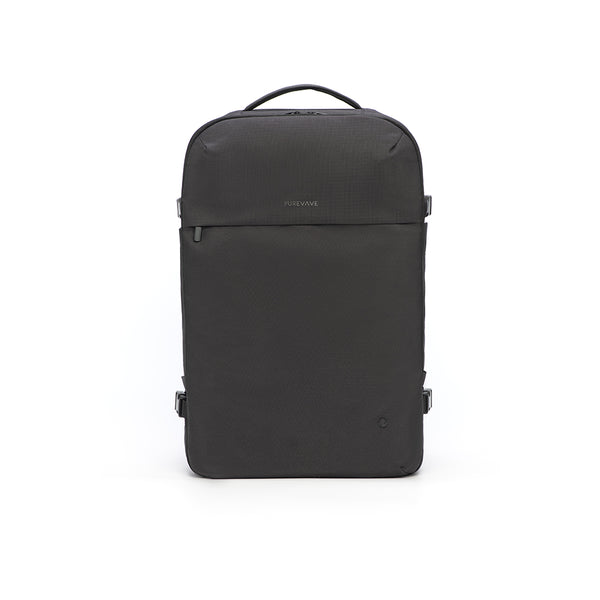
For business trips, the Purevave Large Travel Carry-on Backpack offers a spacious main compartment for folded clothing and other travel essentials. Its separate padded compartment fits laptops up to 17 inches, making it a practical laptop backpack for traveling while helping keep the laptop’s rigid edges away from your suit. Made with durable recycled materials, it also features padded shoulder straps, a ventilated back panel, and the clean appearance of a simple modern backpack. At 20.5 × 13 × 6.7 inches, it provides practical packing space for weekend trips and overnight business travel.
Remove Wrinkles After Arrival
Unpack the Suit Right Away
As soon as you reach your hotel room or accommodation, open your backpack and remove the suit bundle from the plastic bag. Hanging the garment immediately allows the fibers to relax and lets gravity release minor wrinkles that developed during travel.
If minor wrinkles remain, check the suit’s care label first. For light wrinkles, hang a wool suit in a steamy bathroom or use a handheld garment steamer according to its instructions. Keep the steamer moving, avoid pressing it against the fabric, and let the suit dry before wearing it.
When to Use a Garment Bag
While a backpack works well for single-suit, short-duration trips, a dedicated garment bag is the better choice when traveling with multiple suits or delicate tuxedos. A garment bag is also usually the safer choice for suits made of heavy, highly structured fabric that resists compact folding, or when you need to head straight from the airport into a formal event with no time to steam your attire.
Final Thoughts
Packing a suit in a backpack comes down to careful folding and smart placement inside your bag. Practice the shoulder-nesting fold before your trip, keep hard items away from the suit, and unpack it as soon as you arrive. Explore Purevave to find practical backpacks designed for business trips, weekend travel, and everyday use.
Frequently Asked Questions
Can You Pack a Linen Suit?
Yes, but linen is naturally prone to creasing due to its stiff plant fibers. Use the dry-cleaning bag technique to minimize friction, fold the suit as few times as possible, and plan on steaming it immediately upon arrival.
How Long Can a Suit Stay Folded?
Keep the suit folded for as little time as possible and unpack it as soon as you arrive. Longer periods under pressure generally make wrinkles harder to release.
Should You Wear the Jacket While Traveling?
If you want to save interior backpack space and eliminate folding entirely, wearing the jacket during transit is a practical option. Remove it carefully before a long period of sitting and place it flat over your lap, or ask whether a coat closet is available.
More reading:
The Secrets to Carry-On-Only Packing for Three-Day Business Trips
How to Pack a Backpack for Travel: Smart, Space-Saving Guide
Is a Backpack a Carry-On or Personal Item? Travel Rules Explained