
Best Backpacks for Middle Schoolers: How to Choose the Right Size, Fit, and Features
Table of Contents
The best backpack for a middle schooler is large enough for daily school supplies but small enough to fit the student's body comfortably. It should stay close to the back, support the actual school-day load, and organize books, technology, and smaller items without unnecessary bulk.
Bigger is not automatically better. An oversized backpack can encourage a student to carry more than necessary, while a bag that is too small may bend folders or place extra stress on the zippers. Choosing the right backpack comes down to three questions: Is it the right size, does it fit correctly, and does it have the features the student will use?
What Size Backpack Is Best for Middle Schoolers?
There is no single capacity that works for every middle school student. A student who uses a locker and carries one tablet with a few folders needs less room than someone who carries textbooks, a laptop, lunch, and gym clothing throughout the day.
Start by listing what the student must carry on the busiest school day. Include the largest binder, school-issued device, notebooks, lunchbox, water bottle, and any clothing or equipment needed for after-school activities. The backpack should hold these essentials without being packed so tightly that the zippers are difficult to close.
The student's daily routine helps determine the most practical size:
|
School-day routine |
Typical items |
Size consideration |
|---|---|---|
|
Locker available |
A few folders, supplies, and a small device |
A compact backpack may be enough |
|
Books carried all day |
Textbooks, binders, and notebooks |
Prioritize main-compartment space without excessive depth |
|
Laptop required |
Device, charger, books, and folders |
Check the device-compartment dimensions |
|
Lunch and activities |
Supplies, lunch, and extra clothing |
Look for additional depth and separated storage |
External dimensions are often more useful than a broad age recommendation. Compare the bag's height and width with the student's torso. A backpack should not extend far beyond the shoulders or hang well below the waist. Students with smaller frames may need a more compact bag even if a larger model offers more storage.
Bring the largest binder and school device when testing a backpack in person. When shopping online, measure those items and compare them with the listed dimensions. A laptop or tablet should slide into its compartment without pressure on the corners, and folders should sit flat instead of curling.
For more help comparing a device with a backpack, see this laptop backpack size guide.
How Should a Middle School Backpack Fit?
A well-fitting backpack stays close to the student's body and does not swing while walking. Adjust both shoulder straps to the same length before judging the fit. The top of the bag should sit below the shoulders, and the bottom should rest around the curve of the lower back rather than hanging far below the waist.
The American Academy of Pediatrics recommends choosing a backpack that is proportional to the child's height, with two broad, padded shoulder straps and a padded back. It also recommends using both shoulder straps instead of carrying the backpack over one shoulder. More fitting and carrying recommendations are available in the AAP's backpack safety guidance.
Fit should always be checked with the backpack loaded. A bag may look suitable when empty but pull backward after books and a laptop are added. Pack the heaviest items closest to the back panel, then adjust the straps so the bag remains close without feeling restrictive.
The loaded weight matters as much as the dimensions. The American Academy of Pediatrics advises that a backpack should not weigh more than 15 percent of a child's body weight. If the student must lean forward to support the bag, struggles to put it on, or experiences discomfort, reduce the load. Locker use, digital materials, or a second set of books may be more helpful than purchasing a larger backpack.
Students grow, and their school requirements change. Recheck the fit during the year, especially after adding a new laptop, larger binders, or sports equipment.
Which Backpack Features Matter for Middle School?
The best middle school backpack does not need every available feature. It needs the features that support the student's actual schedule and make frequently used items easy to carry and find.
Adjustable Shoulder Straps and a Supportive Back Panel
Two adjustable straps help keep the load centered. They should shorten enough to hold the backpack close to the body and remain even after adjustment. Check the stitching where each strap connects to the bag because this area receives repeated stress.
A padded back panel can improve comfort and prevent the edges of books or supplies from pressing directly against the student. Padding should not make the backpack so rigid or heavy that it becomes uncomfortable on its own.
A Practical Main Compartment
The main compartment should open wide enough for binders and folders to slide in without bending. It should hold the student's required books without leaving so much unused space that the contents shift away from the back.
Students who carry thick textbooks may need a structured compartment. Students who use lockers and carry only a few materials may be more comfortable with a lighter, less bulky design.
A Separate Laptop or Tablet Compartment
Students who carry a school-issued computer can compare laptop backpacks with a separate device compartment. This keeps the computer from sitting loose among books, pens, and other supplies.
Measure the actual device before buying. Two laptops with the same advertised screen size can have different outer dimensions. Padding can help protect a device from ordinary bumps and scratches, but it does not make the backpack drop-proof or waterproof.
Useful Organization
A practical layout may include a main section for books, a device compartment, a smaller pocket for pencils and keys, and an external water bottle pocket. More pockets are not always better. Too many small sections can make supplies harder to find during short class changes.
Ask the student where their most-used items would go. If the layout feels confusing before purchase, it is unlikely to become easier during a busy school day.
Durable Zippers and Fabric
Open and close every zipper several times. The zipper should move smoothly without catching the surrounding fabric. Check that the pulls are easy to grip and that the stitching around the zipper track lies flat.
Inspect the base of the backpack and the strap attachment points for reinforced construction. These areas commonly receive the most wear when a bag is set on the floor, placed in a locker, or carried with a full load.
An External Water Bottle Pocket
An external pocket helps keep liquids away from papers and electronics. Test it with the bottle the student actually carries. A pocket that is too shallow or loose may not hold the bottle securely when the bag is set down or moved quickly.
A Style the Student Will Use
Once the size, fit, and essential features are right, let the student help choose the appearance. Some students prefer neutral colors, while others want something brighter or more expressive. The same fit standards apply to backpacks marketed toward middle school boys or girls.
A Purevave Option to Consider
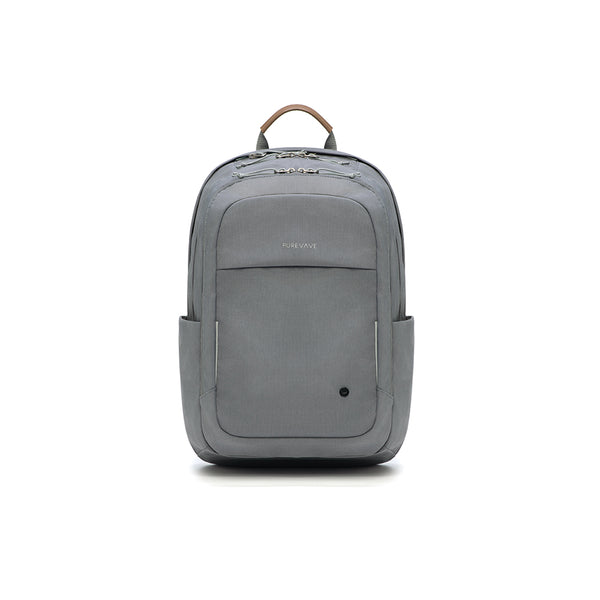
For students who carry a laptop, books, school supplies, and smaller personal items, the Purevave On The Go School Backpack is one option to consider. It has a dedicated laptop compartment and multiple pockets for separating school essentials.
The backpack measures 12.2 inches wide, 17.7 inches high, and 6.7 inches deep and is available in gray, black, and navy. Compare these dimensions with the student's torso, largest binder, and school-issued device before deciding whether it is the right size and fit.
Final Thoughts
The best backpacks for middle schoolers get three things right: size, fit, and useful features. Start with what the student carries, compare the bag's dimensions with the student's body and largest items, and test the fit with a realistic load.
A larger bag is not automatically a better bag, and a long feature list does not guarantee comfort. The right choice is a backpack that stays close to the body, holds the required school supplies, and makes those supplies easy to organize throughout the day.
Frequently Asked Questions
How big should a middle school backpack be?
It should hold the student's largest daily items without extending far beyond the shoulders or hanging well below the waist. Compare external dimensions and device-compartment measurements instead of choosing by age alone.
How heavy should a middle school backpack be?
The American Academy of Pediatrics recommends keeping the loaded backpack at or below 15 percent of the child's body weight. Leaning forward, struggling to put the bag on, or experiencing discomfort can indicate that the load is too heavy.
Does a middle schooler need a laptop compartment?
It is useful when the student regularly carries a laptop or tablet. Confirm that the compartment fits the actual device. If the student does not carry technology, main-compartment space or a lighter overall design may be more important.
How can you tell if a backpack does not fit correctly?
It may be a poor fit if it hangs far below the waist, extends well past the shoulders, swings while walking, or pulls the student backward. Test the fit with the normal school-day load inside.
When should a middle school backpack be replaced?
Replace it when torn fabric, damaged straps, failing zippers, or a poor fit make it difficult to use. A new backpack may also be needed when the student's body, school device, or daily supplies change.